A Restaurant Operator’s Guide to HACCP and ISO Certification in Commercial Kitchens
A step-by-step guide for UAE restaurant operators to achieve HACCP and ISO 22000 compliance, streamline audits, and build food safety systems.
A Restaurant Operator’s Guide to HACCP and ISO Certification in Commercial Kitchens
Operating a high-performing food business in the UAE requires a relentless commitment to quality and food safety. Whether running a multi-brand cloud kitchen in Dubai or an upscale bistro in Abu Dhabi, establishing a haccp certified commercial kitchen is no longer just a regulatory checkbox—it is a competitive necessity.
Modern consumers, corporate clients, and municipal inspectors expect systematic control over every ingredient that enters your storage racks and every meal dispatched from your pass. In this comprehensive guide, we unpack the regulatory roadmap for implementing Hazard Analysis Critical Control Point (HACCP) and ISO 22000 standards, detailing how to turn stringent compliance into operational efficiency.
Understanding the Foundation: HACCP vs. ISO 22000
Before launching an overhaul of your standard operating procedures (SOPs), it is critical to distinguish between HACCP and ISO certifications.
What is HACCP?
HACCP is a preventive, science-based food safety management system. It identifies specific biological, chemical, physical, and allergen hazards along the production line and establishes operational measures to prevent them before they reach the guest.
What is ISO 22000?
ISO 22000 incorporates the core principles of HACCP and the prerequisites established by the Codex Alimentarius Commission, but embeds them within an overarching business management framework. While HACCP focuses directly on food safety hazards at the kitchen bench, ISO 22000 applies continuous improvement cycles, management communication, and traceability across the broader enterprise supply chain.
| Attribute | HACCP | ISO 22000 |
|---|---|---|
| Core Focus | Operational food safety & hazard control | Comprehensive Food Safety Management System (FSMS) |
| Framework | 7 Principles & Prerequisite Programs | High-Level Structure (ISO Annex SL) & continuous improvement |
| Scope | Kitchen processes, handling, & preparation | End-to-end supply chain, communication, & governance |
| Audit Rigour | Focuses on Critical Control Points (CCPs) | Evaluates management reviews, vendor validation, & processes |
For operators aiming for gold-standard compliance, operating a haccp certified commercial kitchen provides the baseline, while ISO 22000 aligns overall kitchen operations with international corporate benchmarks.
The Core Principles of a HACCP Certified Commercial Kitchen
Building compliance begins with the 7 Codex principles that govern every certified kitchen environment:
- Conduct a Hazard Analysis: Map every recipe and operational step—from dry goods intake to plating—to pinpoint where contamination could occur.
- Determine Critical Control Points (CCPs): Identify steps where intervention is vital to eliminate or reduce hazards to safe levels (e.g., core cooking temperatures or chilling times).
- Establish Critical Limits: Define indisputable scientific thresholds (such as maintaining hot holding temperatures above 63°C or cooking poultry to a core temperature of 75°C).
- Establish Monitoring Procedures: Implement continuous or periodic digital checks to verify that every CCP remains within critical limits.
- Establish Corrective Actions: Document automatic operational protocols when limits are breached (e.g., immediate re-cooking, discarding batches, or recalibrating refrigeration units).
- Establish Verification Procedures: Conduct internal tests, swab analyses, and third-party lab checks to prove that the system works in day-to-day operations.
- Establish Record-Keeping and Documentation: Maintain tamper-evident logs of temperatures, equipment servicing, supplier verification, and staff certifications.
Step-by-Step Implementation Roadmap for Kitchen Operators
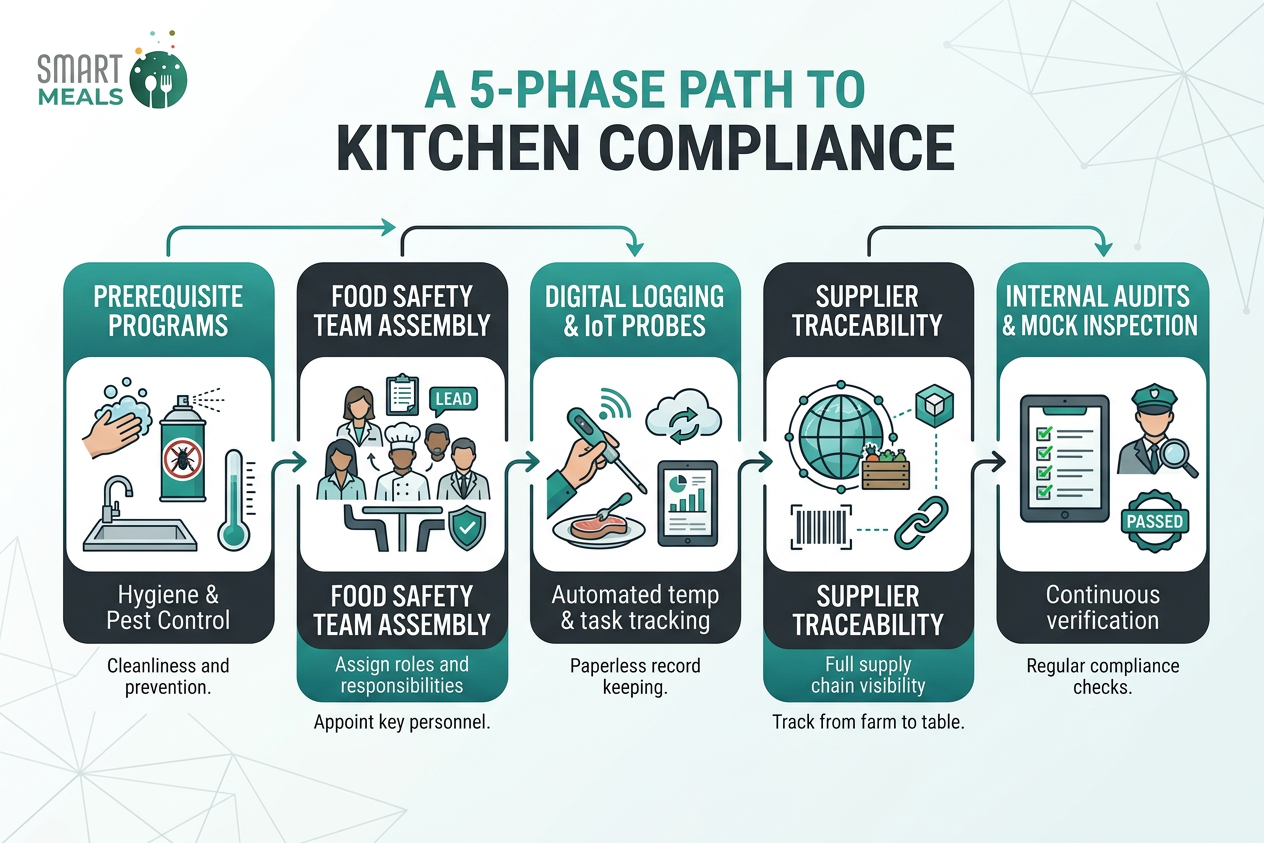
Transitioning an existing kitchen or setting up a new facility to meet UAE food safety expectations involves five practical phases:
Phase 1: Establish Prerequisite Programs (PRPs)
Certifying bodies and municipal auditors will not review your CCP logs until your structural hygiene is sound. PRPs include:
- Pest Control: Certified contractor visits with tamper-proof bait stations and insect light trap mapping.
- Zoning and Cross-Contamination Control: Strict physical separation between raw prep (meats, poultry, seafood, produce) and ready-to-eat stations.
- Water Quality and Air Filtration: Regular laboratory testing of water points and maintenance of HVAC positive pressure systems.
Phase 2: Assemble the Multi-Disciplinary Food Safety Team
Do not delegate safety solely to the Head Chef. Your compliance committee should include your executive chef, kitchen operations lead, maintenance engineer, and procurement manager. For larger setups, engaging an external food hygiene consultant helps eliminate blind spots.
Phase 3: Digitise Temperature and Kitchen Workflow Logging
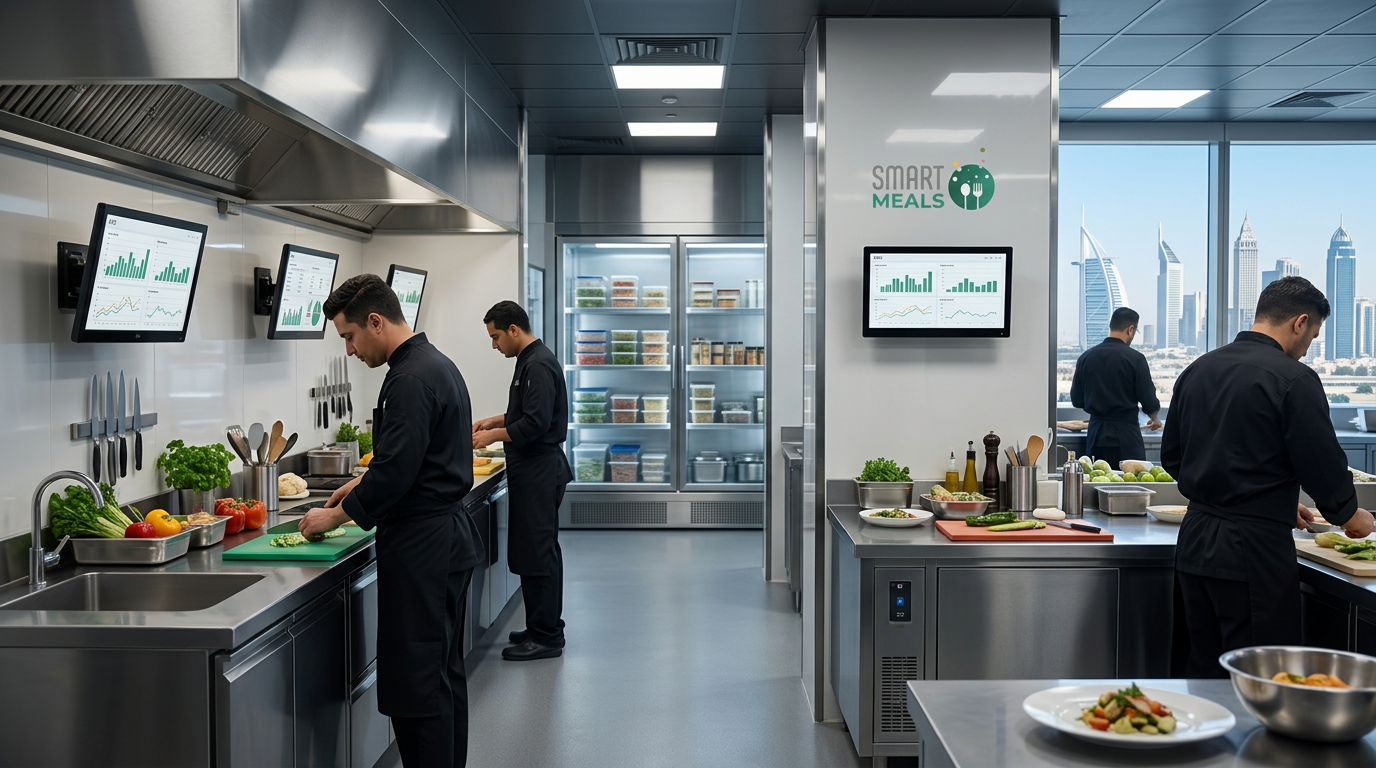
Paper logs are prone to retrospective filing and human error. Modern cloud kitchens utilise IoT temperature probes and digital checksheets that automatically flag deviations. Real-time digital records ensure transparent compliance audits with municipal authorities such as Dubai Municipality's Food Safety Department.
Phase 4: Supplier Verification and Raw Material Traceability
A kitchen cannot produce safe food using unverified raw materials. Your supply chain must be transparent, demanding verifiable documentation from every ingredient distributor. F&B operators can explore our services to understand how centralised operations integrate certified supplier tracking directly into daily prep workflows.
Phase 5: Internal Audits and Pre-Assessment
Run realistic mock audits simulating a surprise inspection. Test your staff on corrective actions: What happens if the walk-in chiller hits 8°C? Ensure every employee can explain their station's specific CCPs without prompting.
The Commercial Advantage of Working with Certified Infrastructure
Achieving and maintaining ISO and HACCP certification demands significant capital expenditure, engineering upkeep, and administrative time. For independent restaurateurs, corporate caterers, and expanding culinary brands, the overhead of building a standalone certified production facility can slow down business growth.
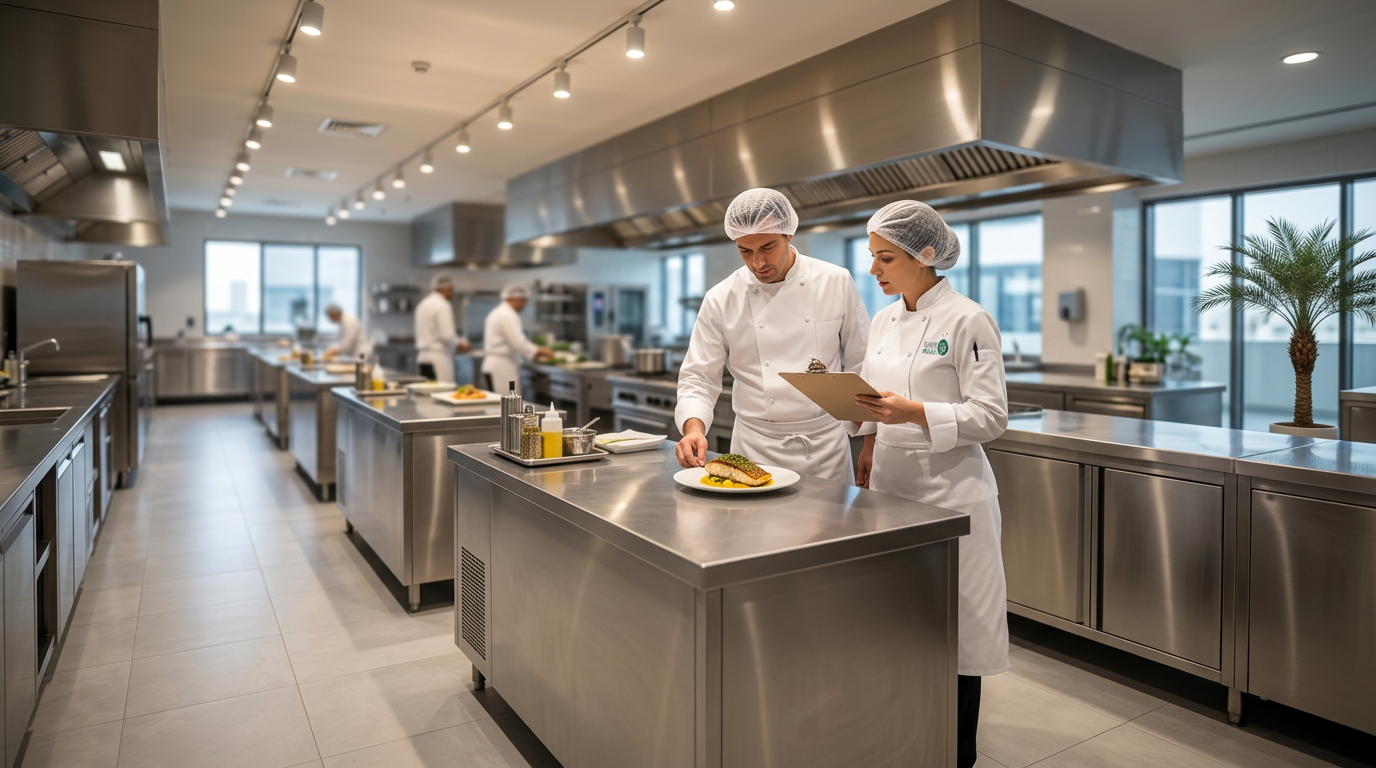
This reality makes partnering with established infrastructure an attractive alternative. At Smart Meals, our purpose-built culinary facilities operate under rigorous HACCP and ISO 22000 management guidelines, providing institutional-grade compliance for high-volume preparation, corporate meal distribution, and multi-unit brands. Operators who leverage certified kitchen networks gain:
- Turnkey Regulatory Approvals: Eliminate lengthy municipal construction sign-offs.
- Zero CapEx on Compliance Retrofitting: Avoid expensive grease trap re-engineering, stainless-steel cladding, and industrial air-handling upgrades.
- Scalable Consistency: Ensure corporate catering contracts, school meals, and retail meal kits meet the highest safety benchmarks.
If your culinary brand requires fully certified production facilities or you are looking for compliant food manufacturing solutions, feel free to contact our operations team to explore our culinary capabilities.
Common Compliance Pitfalls and How to Avoid Them
Even well-designed kitchens encounter compliance hurdles during regulatory reviews. Keep an eye out for these frequent mistakes:
- Inadequate Calibration Logs: Thermometers and cold-room temperature sensors must be calibrated against reference ice-water points and boiling points regularly, with signed calibration sheets.
- Overlooking Allergen Cross-Contact: While biological hazards get top billing, physical allergen cross-contact (such as storing sesame seeds above open preparation tables) constitutes an automatic non-conformance.
- Informal Staff Training: Food safety cards and municipal certifications must be up to date for every employee handling food. Refresher training on personal hygiene and sanitation must be scheduled periodically.
Summary
Transforming an F&B business into a haccp certified commercial kitchen requires disciplined execution, smart documentation, and thorough preventative planning. By implementing standard prerequisite programs, setting verifiable critical control points, and maintaining transparent procurement partnerships, operators protect both their guests and their brand reputation. Whether you manage your own compliance roadmap or partner with established infrastructure, food safety certification remains the ultimate foundation for sustainable restaurant scale.
Frequently Asked Questions
How long does it take for a commercial kitchen to achieve HACCP certification in the UAE?
Typically, the process takes anywhere between 3 to 6 months. This timeline includes conducting the initial gap analysis, establishing prerequisite programs, logging at least 60 to 90 days of continuous monitoring records, and completing both stage-1 and stage-2 third-party audits.
Is HACCP mandatory for all food businesses in Dubai and the wider UAE?
Yes. Food safety regulations enforced by municipal authorities (such as Dubai Municipality and Abu Dhabi Agriculture and Food Safety Authority) require commercial food handlers and production kitchens to adhere to preventive food safety principles aligned with HACCP standards.
What is the difference between a CCP and an OPRP in ISO 22000?
A Critical Control Point (CCP) is a specific operational step where control can be applied to eliminate or reduce a food safety hazard to an acceptable limit (e.g., cooking to a specific temperature). An Operational Prerequisite Program (OPRP) is an essential control measure identified by hazard analysis to prevent or reduce the likelihood of introducing hazards into the product or processing environment (e.g., deep sanitation cycles between shifts).
Can cloud kitchens share a single HACCP certification?
A cloud kitchen facility may possess a master building-level HACCP/ISO certification for its common areas, air handling, and receiving bays. However, individual brand operators within the facility must usually maintain compliant standard operating procedures, personal hygiene records, and kitchen-specific hazard control logs for their dedicated stations.
Frequently Asked Questions
How long does it take for a commercial kitchen to achieve HACCP certification in the UAE?
Typically, the process takes anywhere between 3 to 6 months. This timeline includes conducting the initial gap analysis, establishing prerequisite programs, logging at least 60 to 90 days of continuous monitoring records, and completing both stage-1 and stage-2 third-party audits.
Is HACCP mandatory for all food businesses in Dubai and the wider UAE?
Yes. Food safety regulations enforced by municipal authorities (such as Dubai Municipality and Abu Dhabi Agriculture and Food Safety Authority) require commercial food handlers and production kitchens to adhere to preventive food safety principles aligned with HACCP standards.
What is the difference between a CCP and an OPRP in ISO 22000?
A Critical Control Point (CCP) is a specific operational step where control can be applied to eliminate or reduce a food safety hazard to an acceptable limit (e.g., cooking to a specific temperature). An Operational Prerequisite Program (OPRP) is an essential control measure identified by hazard analysis to prevent or reduce the likelihood of introducing hazards into the product or processing environment (e.g., deep sanitation cycles between shifts).
Can cloud kitchens share a single HACCP certification?
A cloud kitchen facility may possess a master building-level HACCP/ISO certification for its common areas, air handling, and receiving bays. However, individual brand operators within the facility must usually maintain compliant standard operating procedures, personal hygiene records, and kitchen-specific hazard control logs for their dedicated stations.