How Cloud Kitchens Use AI Demand Forecasting to Cut Food Waste by 30%
Discover how cloud kitchen inventory management powered by AI demand forecasting cuts food waste, streamlines prep, and connects POS with B2B supplier hubs.
How Cloud Kitchens Use AI Demand Forecasting to Cut Food Waste by 30%
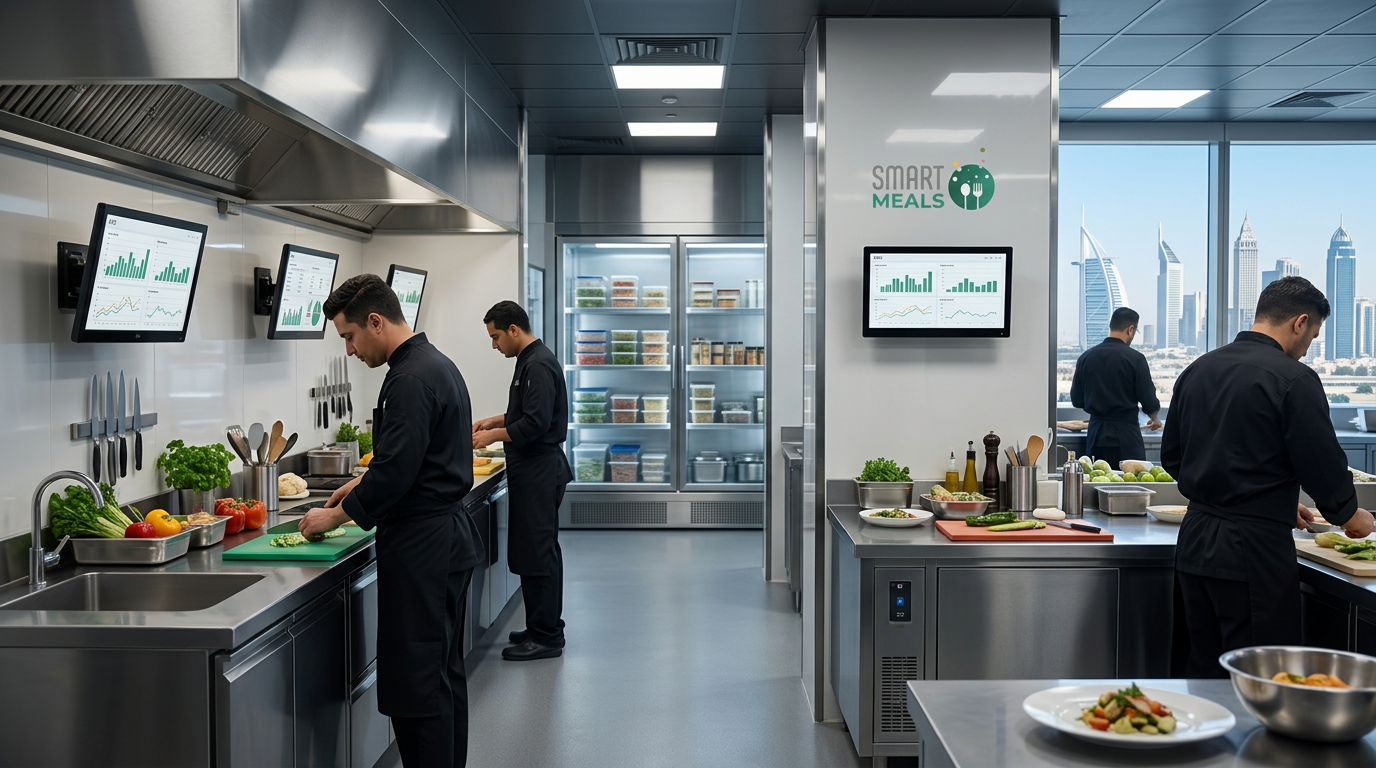
In high-volume commercial delivery facilities, profitability is won or lost in the prep stations and walk-in chillers. For restaurant operations directors managing multi-brand virtual kitchens, the traditional model of relying on manual clipboards, static par levels, and gut-feeling prep schedules is no longer sustainable. Modern cloud kitchen inventory management relies on machine learning algorithms and unified POS workflows to accurately balance raw material orders with real-time delivery demand.
By uniting historical order velocity, localized consumption patterns, and streamlined supplier channels, cloud kitchens across the UAE—from Al Quoz in Dubai to industrial zones in Abu Dhabi and Sharjah—are systematically curtailing over-prepping, reducing spoil rates, and bringing kitchen food waste down by up to 30%.
Here is a technical, data-driven operational breakdown of how artificial intelligence and integrated procurement platforms transform food cost control.
The Over-Prepping Dilemma in Ghost and Virtual Kitchens
Virtual kitchens operate without the buffer of a traditional dining room. In dine-in restaurants, service pacing can be subtly managed by the front-of-house team. In delivery-only facilities, customer tickets arrive unpredictably through third-party aggregators and direct-ordering channels simultaneously.
To meet aggressive 10-to-15-minute kitchen dispatch windows, kitchen teams routinely default to buffer prepping. Line cooks batch-grill proteins, pre-slice delicate produce, and par-cook side dishes to ensure delivery drivers are not left waiting at the dispatch bay.
However, this defensive prep strategy creates three critical points of operational failure:
- Premature Batch Spoilage: Sensitive prepped ingredients held at ambient kitchen temperatures or inside hot-holding cabinets degrade rapidly. Unsold prepped proteins must often be discarded at the end of the shift due to strict food safety protocols.
- Multi-Brand Ingredient Cannibalization: When a single kitchen facility houses six distinct virtual concepts using shared dry storage and walk-ins, blind over-prepping for Brand A directly causes sudden stockouts for Brand B.
- Distorted Purchasing Cycles: Over-prepping obscures true ingredient depletion. When prep cooks pull inventory forward without immediate POS record updates, purchasing teams end up reordering goods they already have or missing emergency stockouts.
Solving this problem requires moving beyond legacy spreadsheets into an intelligent, data-driven approach to cloud kitchen inventory management.
The Mechanics of AI Demand Forecasting in Kitchen Operations
Unlike rule-based systems that rely merely on a trailing three-week moving average, artificial intelligence models apply multi-variable regression to determine precise daily and hourly ingredient requirements.
1. Granular Demand Variables
An AI-powered forecasting engine processes multiple concurrent data layers before generating prep sheets:
- Micro-Temporal Trends: Historical order volumes mapped not just by day of the week, but by 30-minute operational time blocks.
- Localized Weather & Environmental Signals: High summer temperatures in the UAE directly drive midday chilled beverage orders and evening hot meal deliveries.
- Localized Event Dynamics: Public holidays, major sporting broadcasts, and regional events such as Ramadan or Dubai shopping festivals create distinct consumption spikes.
- Promotional and Platform Marketing Shifts: Dynamic aggregator banner placements or targeted push notifications that instantly surge order volumes for specific virtual brands.
According to research on operational supply chains from McKinsey & Company, organizations that implement algorithmic forecasting achieve marked reductions in supply-chain errors and inventory carrying costs. In commercial culinary environments, this translates directly to fewer wasted kilograms of fresh raw materials.
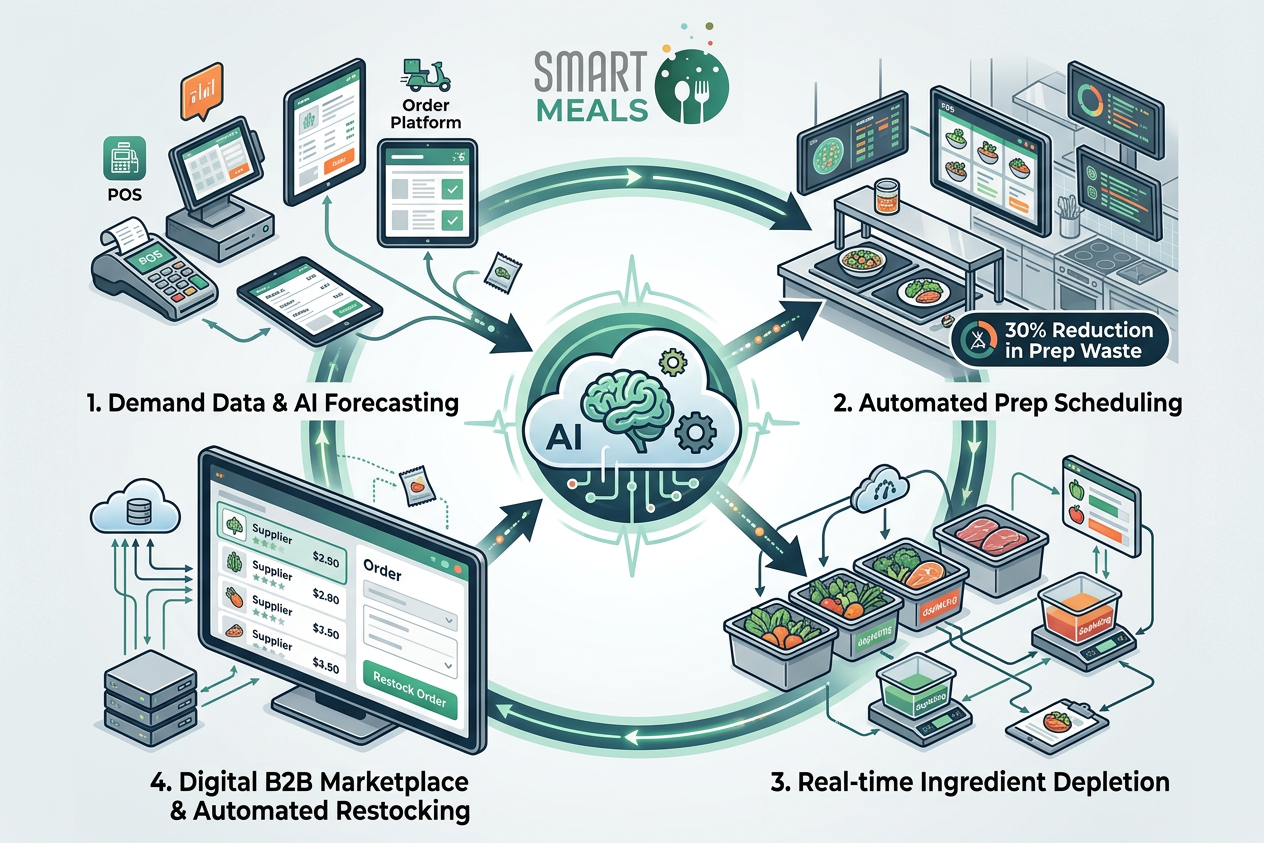
System Workflow: Historical POS Data + Real-Time Platform Signals + Seasonal Trends → AI Demand Forecasting Engine → Automated Digital Prep Sheets & Dynamic Procurement Triggers.
2. Recipe Exploded Depletion
For forecasting to protect operating margins, it must tie directly to recipe engineering. When an order for a gourmet chicken burger is accepted through an AI-integrated system, the platform calculates theoretical depletion down to the gram: 180 grams of marinated chicken breast, 1 brioche bun, 30 grams of house sauce, and 15 grams of shredded lettuce.
By calculating batch-level conversion losses, yield percentages, and real-time sales, the system establishes a dynamic feedback loop. If prep cooks chop 10 kilograms of onions, the system knows precisely how many portions of base curry or sauce that prep run must produce. Discrepancies between theoretical depletion and actual stock counts are flagged within hours rather than at month-end audits.
Bridging Kitchen POS with B2B Supplier Integration
Predictive demand forecasting solves only half the margin puzzle if procurement remains isolated from daily kitchen operations. High-performance cloud kitchens run a closed-loop system where POS data communicates directly with suppliers.
When cloud kitchen inventory management systems operate in a vacuum, procurement managers manually check stock, draft purchase orders, exchange WhatsApp messages with multiple vendors, and wait for unconfirmed delivery confirmations. This friction leads to large safety buffers—ordering extra cases of perishables "just in case."
Modern FoodTech ecosystems close this operational gap by integrating kitchen operations with digital B2B vendor marketplaces. Within the Smart Meals ecosystem, this workflow is achieved through the synergy between SmartPOS and the Smart Suppliers Marketplace.
- SmartPOS tracks kitchen consumption, real-time ticket volumes, and theoretical inventory burn.
- When projected inventory falls below the dynamically calculated reorder threshold, SmartPOS triggers streamlined procurement workflows.
- Restaurant buyers discover vetted vendor catalogues and submit digital Quotations or Orders directly to approved food suppliers in UAE without fragmented offline communication.
By integrating daily sales data with verified supplier delivery windows, commercial kitchens shift from defensive stockpiling to lean, just-in-time culinary procurement.
Traditional Inventory Management vs. AI-Driven Predictive Systems
- Prep Scheduling: Traditional operations rely on static morning prep lists based on chef intuition, leading to end-of-shift waste. AI-driven systems provide dynamic hourly prep batches updated via real-time platform signals.
- Purchasing Triggers: Traditional purchasing runs on fixed calendar dates, risking spoilage or over-ordering. AI systems generate dynamic reorder points based on projected consumption and lead times.
- Waste Visibility: Legacy setups identify waste weeks later during monthly reconciliations. AI systems compare theoretical burn with actual stock daily, flagging variances instantly.
- Supplier Coordination: Traditional workflows involve fragmented phone calls and manual entries. Unified platforms connect POS demand directly to digital supplier storefronts.
A 4-Step Technical Framework for Operations Directors
To systematically cut prep waste and maintain tight culinary control across virtual facilities, operations teams should implement the following phased implementation framework:
Step 1: Standardize Ingredient Units and Base Recipes
Before software can forecast requirements, ingredient naming and measurement units must be standardized across every virtual brand. Eliminate subjective units (e.g., "bunches" or "boxes") and mandate precise metric measurements (grams, milliliters) across all digital recipe cards.
Step 2: Implement Batch Kitchen Display Systems (KDS)
Replace paper order chits with interactive KDS terminals at every prep and cooking station. When multiple brands share identical raw components (such as diced chicken thigh or cooked basmati rice), the KDS aggregates multi-brand tickets into combined batch prep instructions, preventing cooks from over-portioning separate micro-batches.
Step 3: Shift from Daily to Shift-Based Micro-Prep
Rather than prepping 100% of the day's projected mis-en-place at 8:00 AM, configure your cloud kitchen software to split prep requirements into distinct operational windows (e.g., lunch peak prep, mid-afternoon transition, dinner peak prep). If lunch sales dip below forecasted thresholds, the system automatically dials back dinner prep requirements.
Step 4: Automate Restocking with Verified Local Suppliers
Reduce supply chain volatility by sourcing through verified platforms that detail exact service areas, lead times, and digital product specifications. Connecting kitchen software with regional networks—such as the Smart Meals B2B infrastructure—ensures your procurement team orders precisely what the kitchen needs, backed by full order tracking and transparent documentation.
As the UN Food and Agriculture Organization (FAO) highlights, systematic food waste prevention requires real-time coordination across every tier of sourcing and processing. For commercial cloud kitchens, algorithmic prep management is the most effective operational tool available.
Summary: Protecting Kitchen Margins in the Modern F&B Era
Cutting kitchen waste by 30% is not achieved by lecturing kitchen staff about portion sizes; it is achieved by removing the guesswork from their prep stations. By replacing static par levels with predictive, AI-driven demand forecasting, commercial kitchen directors ensure that line cooks prep only what customers will order, while procurement managers source exactly what kitchens consume.
Whether you are scaling a multi-brand delivery kitchen in Dubai or managing multi-unit catering hubs across the wider UAE, operational efficiency hinges on uniting your point of sale with your supply chain.
Are you looking to optimize your commercial kitchen operations, improve raw material sourcing, or explore high-capacity food solutions? Contact our team today to learn how the Smart Meals ecosystem powers the future of foodservice.
Frequently Asked Questions
What is cloud kitchen inventory management?
Cloud kitchen inventory management is the specialized process of tracking, forecasting, and procuring raw ingredients and packaging across multiple virtual food delivery brands operating within a shared commercial kitchen facility.
How does AI demand forecasting reduce over-prepping?
AI demand forecasting analyzes granular historical sales by 30-minute blocks, regional weather patterns, marketing promotions, and holidays to generate precise, shift-based prep lists rather than relying on static daily guesswork.
How does SmartPOS connect with the Smart Suppliers marketplace?
SmartPOS tracks real-time sales and theoretical ingredient depletion. When inventory levels dip toward minimum thresholds, restaurant operators can access the Smart Suppliers marketplace directly through SmartPOS to discover approved vendors, submit RFQs, and issue digital purchase orders.
Can AI inventory forecasting handle multiple virtual brands using the same ingredients?
Yes. Advanced systems aggregate common raw materials—such as proteins, produce, or cooking oils—across every virtual brand menu operating in the facility, providing kitchen teams with consolidated batch prep and depletion metrics.