B2B Food Sourcing in the UAE: How Digital Marketplaces Replace Manual Vendor Sheets
Discover how digital marketplaces transform B2B food procurement in the UAE, replacing manual vendor sheets to improve purchasing speed and profit margins.
B2B Food Sourcing in the UAE: How Digital Marketplaces Replace Manual Vendor Sheets
For commercial kitchen operators, café owners, and catering executives across Dubai, Abu Dhabi, and Sharjah, sourcing raw ingredients has historically meant juggling cluttered spreadsheets, endless WhatsApp message threads, and scattered paper invoices. As the local hospitality sector expands and raw ingredient costs fluctuate, relying on disconnected manual vendor sheets creates costly blind spots in recipe margins and inventory control.
Modern b2b food procurement uae ecosystems are rapidly shifting toward integrated digital marketplaces. By connecting front-of-house point-of-sale inventory directly with approved wholesale suppliers, food and beverage (F&B) operators can replace slow, manual purchasing routines with structured, transparent sourcing workflows that protect operational margins.
The Real Cost of Manual Vendor Sheets in UAE Kitchens
Many hospitality operations still rely on an executive chef or procurement coordinator manually noting stock levels at midnight on a paper sheet or shared Excel workbook. While spreadsheets appear flexible and low-cost on the surface, they introduce subtle friction points that drain kitchen profitability:
- Price Volatility Blind Spots: Import dependencies in the UAE mean that prices for dairy, proteins, and fresh produce can shift quickly. Outdated static sheets often reflect yesterday's prices, causing actual plate costs to exceed initial budget calculations.
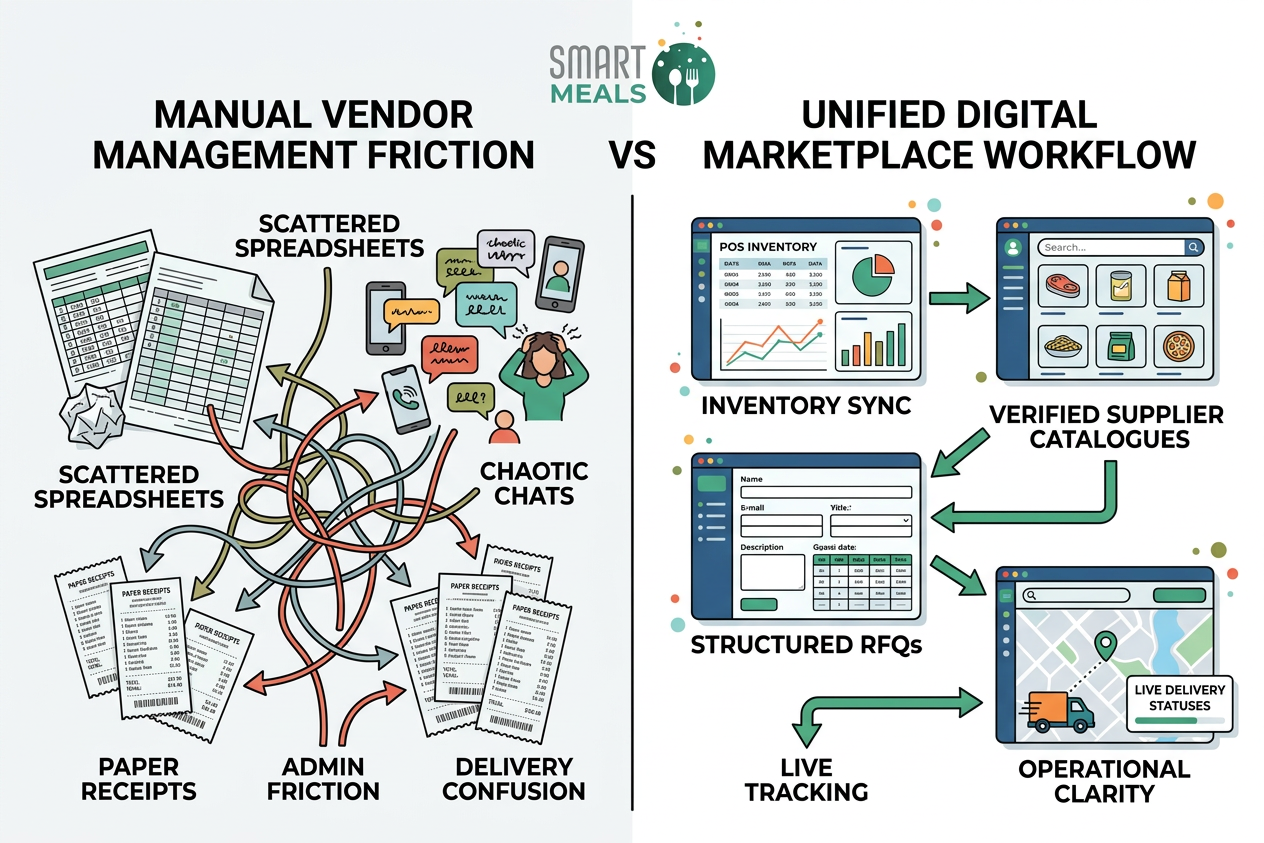
- Fragmented Order Tracking: When orders for produce, dry goods, proteins, and packaging are dispatched across multiple separate messaging chats, kitchen teams lose visibility over delivery confirmations, backorders, and incoming shipment times.
- Manual Data Entry Errors: Transcribing handwritten ingredient lists into supplier purchase orders invites human error, leading to duplicate orders, incorrect unit conversions (such as ordering kilograms instead of cases), and sudden inventory shortages during peak service.
- Vendor Invoice Discrepancies: Reconciling physical delivery notes against negotiated quotes requires hours of administrative work, making it difficult to verify whether suppliers invoiced at agreed contract rates.
To run resilient operations, F&B leaders are moving away from manual entry and embracing structured digital purchasing.
Traditional Purchasing vs. Digital Supplier Platforms
Moving away from manual purchasing is not just about saving time; it directly impacts food cost percentages and purchasing accuracy. Understanding the structural differences between legacy purchasing and modern B2B marketplaces clarifies where efficiency gains occur.
| Operational Feature | Traditional Manual Purchasing (Sheets & WhatsApp) | Integrated Digital Sourcing (Marketplaces & POS) |
|---|---|---|
| Catalogue Discovery | Calling sales reps or waiting for updated PDF price lists | Browsing verified, categorized digital supplier storefronts |
| Price & Quotations | Sifting through separate chat logs and ad-hoc email threads | Centralized RFQs (Requests for Quotation) submitted in clicks |
| Order Tracking | Unstructured messaging confirmations prone to missed drops | Systematic order statuses: Preparing, Ready to Deliver, Delivered |
| Margin Visibility | Retrospective analysis weeks after invoices are manually keyed in | Real-time ingredient cost tracking linked directly to recipe yields |
| Procurement Cycle Time | 2–4 hours daily spent compiling orders across separate vendors | Minutes to assemble structured purchase orders from verified suppliers |
By centralizing procurement, hospitality businesses eliminate administrative bottlenecks and gain visibility over purchase history across all operating units.
Why B2B Food Procurement UAE Operations Benefit from Connected Ecosystems
Effective food sourcing does not happen in isolation from kitchen execution. When procurement platforms operate independently from the restaurant point-of-sale and kitchen display systems, inventory data remains siloed.
Modern FoodTech networks integrate these touchpoints. In an interconnected model, restaurant buyers access digital supplier catalogues through solutions like SmartPOS, while commercial suppliers list their verified catalogues on specialized hubs like the Smart Suppliers marketplace. This provides distinct operational advantages:
1. Accurate Reorder Triggers
When ingredients are depleted through dish sales recorded in your POS, the inventory balance adjusts automatically. Instead of an assistant chef guessing how many kilograms of basmati rice or chicken breast remain in the walk-in chiller, the system surfaces accurate restock alerts based on real consumption trends.
2. Structured Request for Quotations (RFQs)
Specialty catering events, large corporate gatherings, or school lunch programs often require specific bulk ingredients that fall outside standard daily orders. Rather than calling multiple individual reps, buyers can issue structured RFQs through digital portals to compare supplier availability, service areas, and commercial terms in one interface.
3. Clear Service and Delivery Boundaries
In multi-unit operations spanning Dubai Marina, Downtown, and industrial catering hubs in Sharjah or Abu Dhabi, not every vendor delivers to every zone daily. Digital supplier storefronts clearly state delivery schedules and coverage areas, preventing missed morning prep windows.
The Role of Supplier Verification and Catalogue Transparency
Switching to a digital procurement model requires high confidence in the reliability of wholesale partners. Unlike unvetted online directories, reputable B2B marketplaces require commercial vendors to complete business documentation reviews before their storefronts become visible to restaurants.
When suppliers upload their business information, trade licenses, and categorized product catalogues, operators can inspect:
- Precise Product Classifications: Distinct listings for fresh produce, chilled meats, specialty bakery ingredients, frozen goods, and eco-friendly packaging materials.
- Pack Sizes and Minimums: Transparent item configurations that prevent misaligned deliveries.
- Operational Compliance: Clear insight into vendor credentials, facilitating adherence to local food safety practices including the rigorous standards monitored by Dubai Municipality and Abu Dhabi Agriculture and Food Safety Authority (ADAFSA).
Suppliers benefit equally from this structure. By maintaining a single digital storefront, wholesalers eliminate the overhead of manually emailing updated price sheets to dozens of individual kitchen accounts.
Five Steps to Transition from Spreadsheets to Digital Sourcing
Upgrading purchasing workflows does not require shutting down existing kitchen operations. Operators can follow a structured five-step path to move from manual sheets to modern platforms:
- Standardize Internal Ingredient Master Lists: Before digitizing, clean up internal ingredient names and stock-keeping units (e.g., standardizing "Whole Milk 1L" across all branch recipes).
- Identify Primary Sourcing Categories: Pinpoint high-turnover ingredients where price fluctuations hurt margins most—typically fresh proteins, dairy, cooking oils, and staple grains.
- Map Sourcing Locations: Document delivery schedules for each venue to ensure chosen suppliers regularly service your specific districts in Dubai, Abu Dhabi, or the Northern Emirates.
- Adopt an Integrated Buying Channel: Restaurant and cloud kitchen buyers can consolidate purchasing by utilizing systems like SmartPOS to browse approved supplier storefronts, send RFQs, and monitor fulfillment stages.
- Review Plate Cost Analytics Continuously: Use incoming order data to compare actual ingredient acquisition costs against menu pricing, adjusting portion engineering where supplier rates have shifted.
If your organization manages commercial kitchens or requires custom supply setups for events or corporate dining, reaching out through our catering and operations contact team can help align your menu planning with streamlined ingredient supply.
Summary: Protecting Kitchen Margins with Modern Sourcing
The UAE hospitality and food service industry moves too quickly for manual vendor sheets. Spreadsheets hide cost fluctuations, create administrative fatigue, and leave kitchen teams vulnerable to delivery discrepancies during busy service rushes.
Transitioning to digital b2b food procurement uae workflows empowers operators with clear catalogue visibility, simplified RFQ workflows, and unified inventory tracking. Whether you operate a single specialty café or a multi-brand cloud kitchen network, modernizing how you order ingredients is the fastest way to protect operational margins.
Frequently Asked Questions
How do restaurant buyers access the Smart Suppliers marketplace?
Restaurant and F&B buyers access the marketplace directly through SmartPOS, allowing operators to browse approved supplier storefronts, request quotes, and manage orders from their central operational system.
How do suppliers get listed on the marketplace?
Suppliers can register for free on the Smart Suppliers portal, complete their business profile, upload product catalogues and delivery areas, and submit documentation for review. Storefronts go live to buyers upon administrative approval.
Can restaurants send RFQs for custom bulk ingredients?
Yes. The platform supports structured RFQ (Request for Quotation) workflows, allowing F&B operators to request custom pricing or availability directly from approved suppliers.
How does digital procurement help reduce food waste?
By connecting POS inventory levels with digital supplier catalogues, kitchens purchase based on accurate depletion rates and dynamic demand rather than rough spreadsheet estimates, significantly cutting over-ordering.